

Lynn finds it super hard to focus on her PhD without an imminent deadline. Agreements with her supervisor help, but they have their limit. For this past month, she participated in a conference which she loved: seminars, talks and lectures every day, social dinners and other events – plus, she played a big part in organising and coordinating the whole thing. Now she’s back at her desk without any motivation whatsoever. “It’s like an adrenaline slump”, she says. “I didn’t get anything done yesterday. I was just procrastinating. And it doesn’t feel like today is going to be any different.”
On the surface, Lynn’s problem may seem like a luxury. Who wouldn’t want to have the freedom to immerse themselves in their research without any additional responsibilities like running experiments or teaching classes, or necessary coordination for co-authoring a paper?
Isn’t that any serious researcher’s dream? To have time for deep thinking?
Maybe Lynn just isn’t cut out for research?
I don’t think that’s the problem. Lynn is very serious about her research. She loves her topic. She’s good at writing. She’s good at giving herself structure.
The problem is that her body and her mind need rest and that she feels too guilty to not work.
She’s gone through a phase of high (positive) stress, which is now over. Our bodies have a stress response that looks something like this:
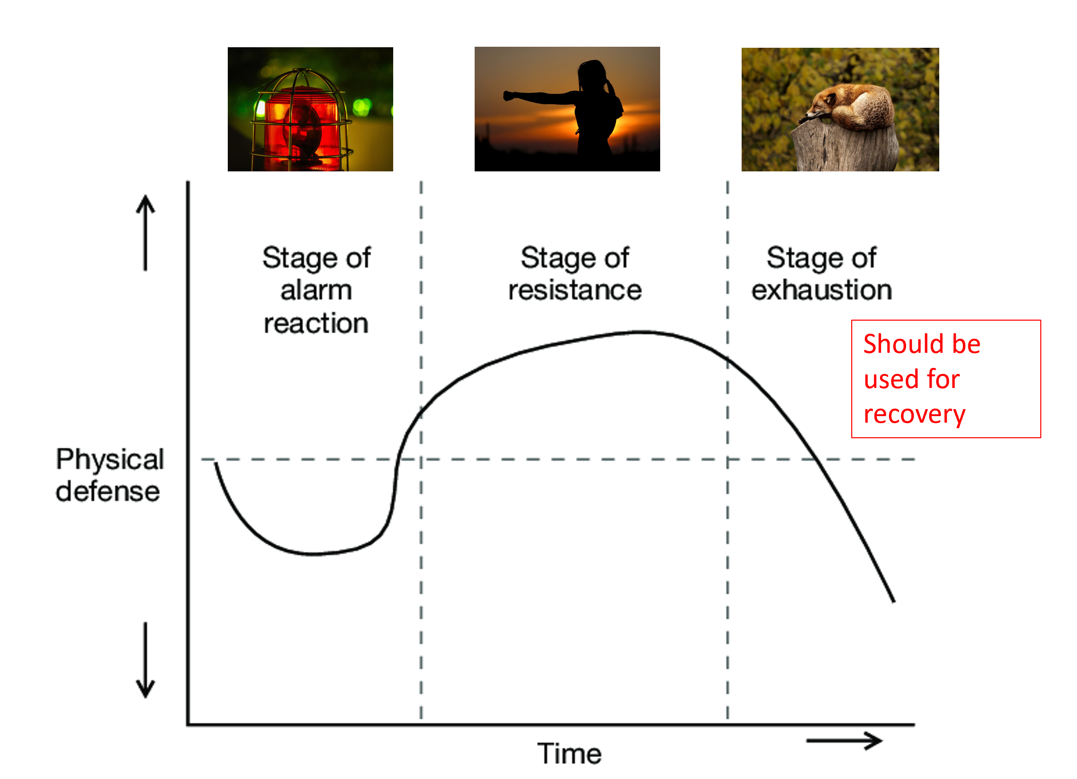
Lynn feels exhausted – she says so during our check-in. But instead of honouring her body’s signals, she tries to force herself to be productive. Without success.
What about you? Are you looking back on a period of intense creative, mental work? And are now feeling guilty because it’s hard to find your focus again?
Then try this: Give yourself some real rest. What would help your brain best to recover?
Maybe it’s a few days where you allow yourself to follow your intuition. Sleep in. Read a trashy novel. Catch up with a friend. Spend the day outdoors. Engage in playful stuff like games, dancing, improv theatre. Ask your body and your brain: “What would do you good?” And wait for a response.
Granted, this approach to combatting guilt about procrastination is only effective if you really are exhausted and your work goal (your PhD or other work project) is genuinely attractive to you.
This approach is also designed for the specific context of doing a PhD that is characterised by a lot of freedom and (too) little external structure. PhDs in the humanities and social sciences usually tick these boxes. (Sometimes, other subjects groups do, too, but it’s much rarer.) Nobody really cares how and when you get your work done. – Except you.
So, you need to care not just about your work, but about yourself. Care for your body and your mind. Make sure that they get what they need to feel rested so that they can then feel energised and curious again.
Enjoying this text? Subscribe to my storyletter to get inspiration directly delivered to your inbox.
Enjoying this storyletter? Why not share with a friend by sending them this invitation to subscribe?


